Bosch ROS20VSC Review: The Best $50 Sander in the Shop
The Bosch ROS20VSC has been on my bench for three years. I've owned a [Festool ETS 125](/reviews/festool-ets-125-req-review), a Makita BO5041, and a DeWalt cordless sander — and the $50 Bosch still gets reached for first when I need to move fast.

Affiliate Notice: This guide contains affiliate links. We earn a commission if you buy through these links. See our disclosure.
Quick Verdict
- At $50–$69, the Bosch ROS20VSC is the most capable budget sander I've used. The microfilter canister, variable speed, and comfortable grip make it a legitimate workhorse for furniture and cabinet finishing. The limitation is dust capacity — large flat surfaces fill the canister in minutes.
Three years ago I set up the Bosch ROS20VSC on my bench as a secondary sander, mostly for rough passes before switching to the Festool ETS 125. After about six months, the Festool moved to the shelf and the Bosch stayed on the bench. It's faster to reach, lighter in hand, and for 80% of what I do — smoothing hardwood faces before wiping on a finish — it's genuinely as good.
Here's what the full picture looks like after three years of regular use.
What Makes the Microfilter Canister Worth Having?
Most sanders in this price range require a shop vac connection for dust collection. The ROS20VSC's microfilter canister is a sealed compartment that catches fine sanding dust at the source — no hose, no vac, no cord management.
The tradeoff is capacity. The canister holds about a cup of sanding dust before it starts to reduce airflow noticeably. On a large flat surface — a dining tabletop, wide drawer faces — I empty it every two to three passes. That sounds tedious, but the math works in favor of the cordless, vac-free workflow for most sessions.
For production sanding where you're going through sheet goods all day, connect it to a shop vac with the dust port adapter (included). The suction is strong enough for genuine on-tool collection when vac-connected, and the canister stays in place as a secondary filter.
Is the Variable Speed Actually Useful?
Yes — specifically the low end. The ROS20VSC runs from 7,500 to 12,000 OPM via a top-mounted dial.
- 12,000 OPM (max): For aggressive stock removal with 80 or 100 grit on flat surfaces. Fast material removal, slightly more visible swirl pattern.
- 7,500–9,000 OPM (low): Final pass before finish. The slower orbit reduces swirl marks on hardwoods, especially when moving to 180 or 220 grit. The difference in final surface quality between max speed and 8,000 OPM with 220 grit is visible in reflected light.
I sand everything at max speed through 150 grit, drop to 8,000 OPM for 180 grit, and finish at 8,000 OPM with 220 grit. The resulting surface takes an oil finish evenly without visible sanding marks.
Best For
- Final prep sanding before stain, oil, or lacquer on solid wood
- Cabinet faces and doors where swirl marks in the finish are unacceptable
- Chair and table legs where you need to move the sander frequently
- Anyone who wants to skip the shop vac hookup for short sessions
How Does It Compare to the Makita BO5041?
The Makita BO5041 is the other standard recommendation at this price point. I own both and use both regularly. The comparison:
Bosch ROS20VSC wins on: Dust collection (the microfilter canister is better than Makita's bag), variable speed range (the low end of 7,500 OPM is lower than Makita's 4,000–10,000 range in a useful way), and ergonomics — the Bosch grip is slightly slimmer and less fatiguing over long sessions.
Makita BO5041 wins on: Slightly better pad damping that produces marginally fewer swirl marks at the same grit, and a paper-bag dust collection option that's easier to empty than a hard canister.
In practice, both produce finish-ready surfaces with 220 grit. The Bosch dust canister is the differentiating feature for users who want to sand without running a shop vac.
For a full sander comparison, see our tool comparison page.
Is It Good Enough for Hardwood Finishing?
Yes — with technique. The key to swirl-free hardwood finishing with any random orbital sander is working through grits systematically rather than skipping from 80 to 220. On maple or cherry (both of which show every sanding artifact in a clear finish), I run 80 → 100 → 120 → 150 → 180 → 220. That last pass at 7,500–8,000 OPM with fresh 220-grit discs leaves a surface that takes oil finish beautifully.
On walnut or darker hardwoods where swirl marks are harder to see, I skip to 80 → 120 → 180 → 220 without issue.
The pad quality matters as much as the sander. Replace worn discs before they glaze — a dull disc at 150 grit creates more swirl marks than any sander design difference at this price range.
Skip If
- You need corded vac-level dust extraction for health or code reasons in a professional setting — look at Mirka DEROS
- You want cordless — the DeWalt DCW210B at twice the price is the right call
- You're doing aggressive stock removal — a belt sander or 80-grit sheet sander is faster
What About Long-Term Durability?
Three years in, the ROS20VSC shows zero wear that affects performance. The pad is on its second replacement (I sand a lot — one pad lasts roughly 6–8 months of regular use), the canister seal is intact, and the variable speed dial is smooth and accurate throughout the range.
At $50–$69, I'd buy a second one if this one failed tomorrow rather than step up to anything between this and a Mirka or Festool. The gap in price to the next-tier tools ($150–$300) isn't matched by a proportional gap in performance for wood finishing.
Frequently Asked Questions
What sanding discs work with the ROS20VSC? Any standard 5-inch hook-and-loop (Velcro-back) disc with 8-hole dust extraction pattern. Diablo, Festool Rubin/Brilliant, Mirka Abranet, and 3M all make compatible discs. I use Mirka Abranet for final passes — it produces the cleanest surface at 180 and 220 grit.
Can I connect it to a Festool dust extractor? With a port adapter (available for $15–20), yes. The connection isn't airtight like a Festool-native tool, but suction is strong enough to meaningfully improve collection. If you already own a Festool CT vac, the adapter is worth the $15.
How does it compare to the DeWalt DCW210B cordless? The cordless DeWalt is convenient for outside finishing work or a shop without outlets overhead. For bench-based sanding, the corded Bosch has more consistent power at max OPM. The DeWalt battery adds weight. For pure finish quality, they're equivalent — the decision is corded vs cordless.
Bottom Line
The Bosch ROS20VSC is the best $50 I've spent on a sanding tool. The microfilter canister, true variable speed with a useful low end, and comfortable grip make it a workhorse that outpunches its price point. If you're finishing furniture, building cabinets, or just need a reliable corded sander that handles 80% of jobs without plugging in a shop vac, this is the one. Not sure what sander fits your workflow? Our tool finder can help.
Shop Bosch ROS20VSC Random Orbit Sander on Amazon↗You Might Also Like
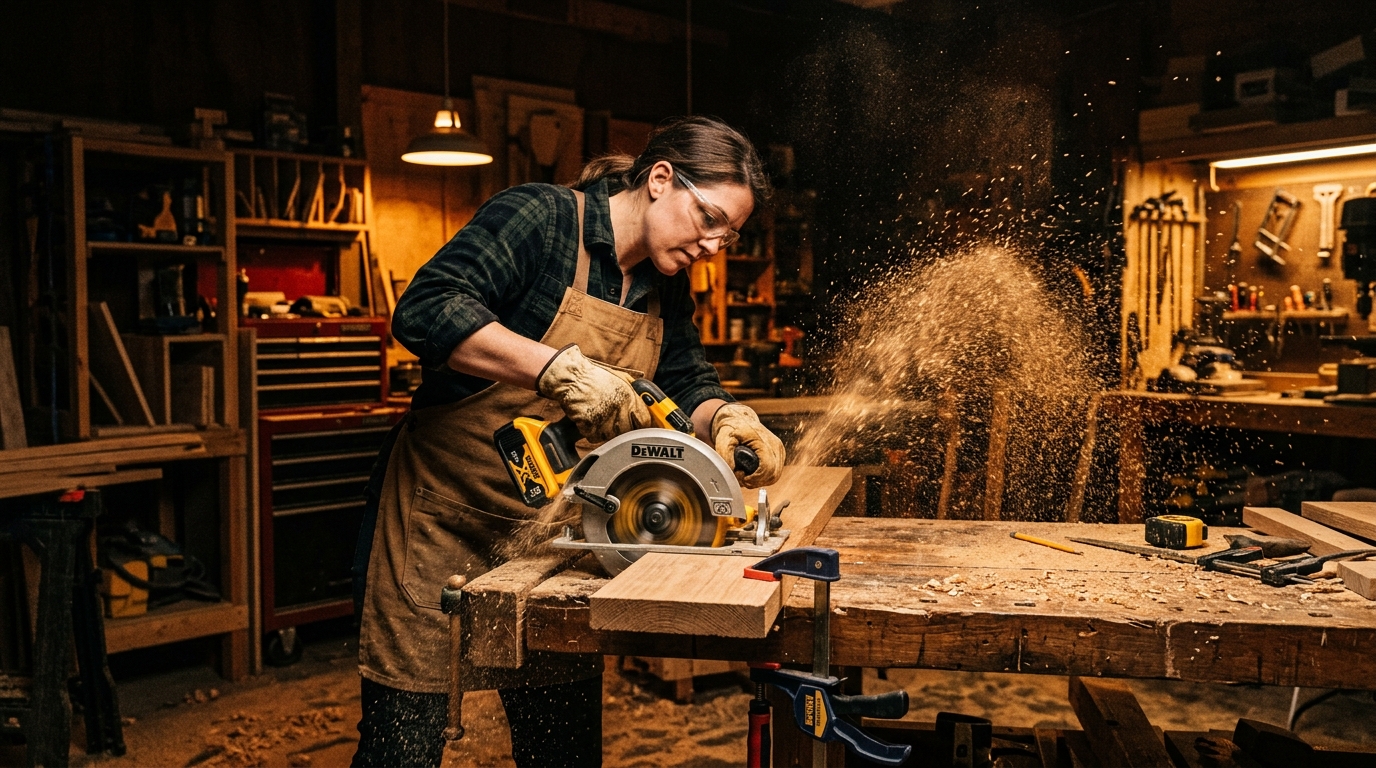
Best Cordless Circular Saws 2026: Pro vs DIY Models Compared
Milwaukee M18 FUEL, DeWalt 20V MAX, and Makita 18V LXT circular saws compared across power, blade size, price, and who each one actually fits.
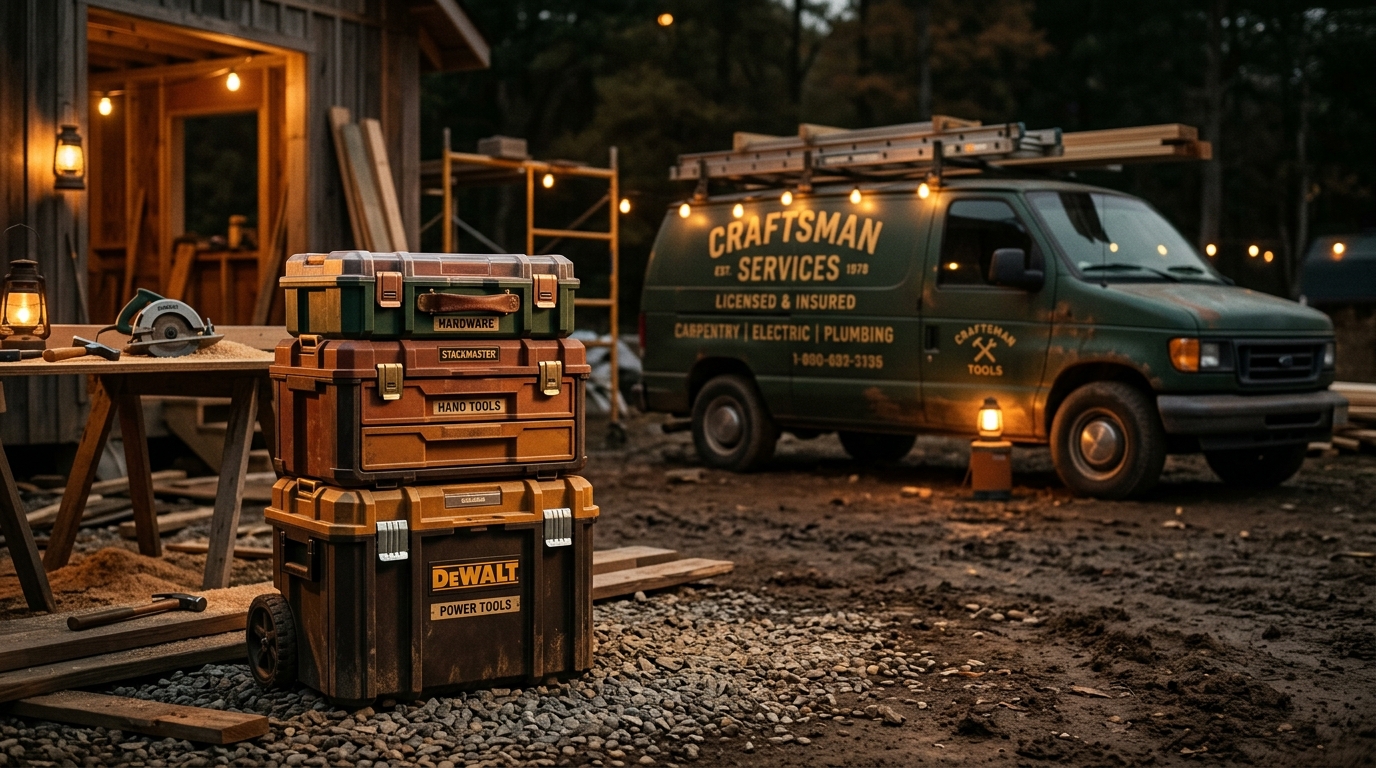
Milwaukee Packout vs DeWalt ToughSystem 2.0 vs Ridgid Pro Gear: Modular Storage Showdown 2026
Three modular tool storage systems compared: Milwaukee Packout, DeWalt ToughSystem 2.0, and Ridgid Pro Gear. Which one belongs on your job site?
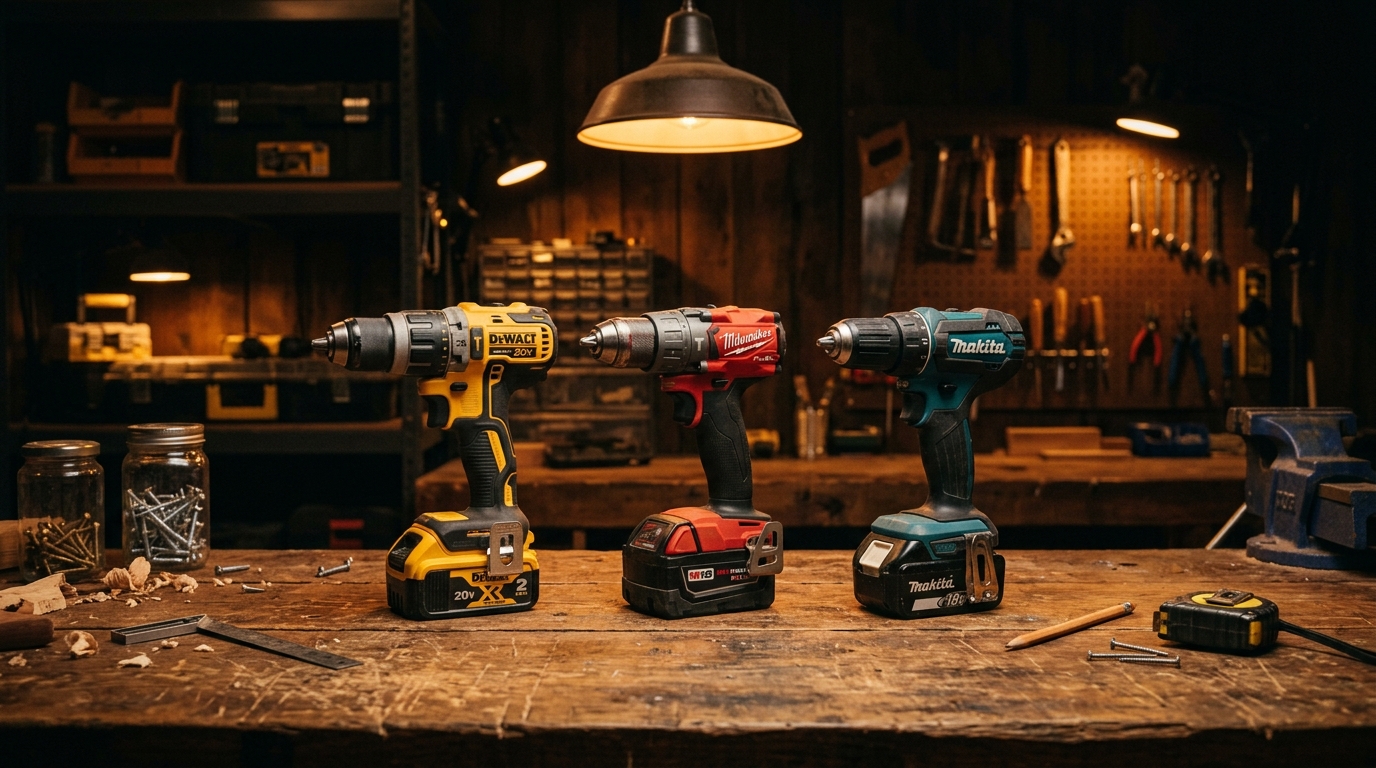
Milwaukee vs DeWalt vs Makita: Best Cordless Drill Driver Showdown 2026
We put the Milwaukee M18 FUEL, DeWalt 20V MAX XR, and Makita 18V LXT drill drivers head-to-head. Here's which one wins for pros, DIYers, and everyone in between.