DeWalt 20V MAX vs XR vs ATOMIC: Which Tier Do You Actually Need?
DeWalt's 20V lineup has three tiers — and the differences matter more than the marketing suggests. Here's what each designation actually means for your work.

Affiliate Notice: This guide contains affiliate links. We earn a commission if you buy through these links. See our disclosure.
Walk into any Home Depot and you'll find three flavors of DeWalt cordless tools wearing the same yellow and black: 20V MAX, 20V MAX XR, and 20V MAX ATOMIC. They use the same batteries. They often sit within $20 of each other on the shelf. And DeWalt's marketing doesn't make the differences easy to understand at a glance.
Here's the plain-language breakdown of what each tier actually means — and which one to buy.
What the Three Designations Actually Mean
DeWalt uses three labels to segment their 20V lineup by motor type, output, and form factor:
- 20V MAX — Standard tier; brushed or basic brushless motors, entry-level pricing
- 20V MAX XR — Extended Runtime; high-output brushless motors, longer runtime, more power
- 20V MAX ATOMIC — Compact tier; brushless motors in the smallest possible body
The "20V" itself refers to the battery's maximum charge voltage (nominal is 18V — this is an industry-wide naming convention). The voltage is the same across all three tiers. A 20V MAX battery from any tier will power any 20V MAX, XR, or ATOMIC tool interchangeably.
20V MAX Standard: The Entry Point
The standard 20V MAX tier covers DeWalt's most affordable cordless lineup. Older tools in this tier use brushed motors; newer additions use basic brushless. Either way, output and runtime fall below XR.
Representative tools:
- DCF885 Impact Driver — 1,400 in-lbs torque
- DCD771 Drill/Driver — 300 UWO output
- DCS391 Circular Saw — 5,250 RPM, brushed motor
Best use cases: Light-duty home projects, occasional use, specialty tools you'll run infrequently (a pruning chainsaw, a tire inflator), supplementing an existing collection at lower cost.
What you give up vs XR: Shorter runtime per charge, lower peak torque, heavier in some cases, less precise motor control.
The standard 20V MAX lineup makes sense when you're buying a tool you'll use twice a year. For anything you'll run regularly, XR is worth the extra $20.
20V MAX XR: The Tier Most Pros Use
XR stands for Extended Runtime, and it earns the name. XR tools run brushless motors tuned specifically for efficiency — more work per charge, more torque, and longer tool life since brushless motors have no brushes to wear out.
What you actually get vs standard:
- 57% longer runtime per charge (DeWalt's published figure)
- Higher torque ceiling — the DCF887 hits 1,825 in-lbs vs 1,400 in-lbs on the DCF885
- Three-speed electronic control with active feedback
- Better thermal management under sustained loads
Representative tools:
- DCF887 Impact Driver — 1,825 in-lbs, 3,250 RPM, 4,000 BPM
- DCD791 Drill/Driver — 460 MWO, two-speed gearbox
- DCS570 Circular Saw — 5,250 RPM, 7-1/4" blade
If you're buying a primary tool you'll use regularly — a drill, an impact driver, a circular saw — XR is almost always the right call. The price premium over standard is typically $10-$30. It pays back quickly in runtime and durability.
Shop DeWalt DCF887 XR Impact Driver on Amazon↗ Shop DeWalt DCD791 XR Drill on Amazon↗20V MAX ATOMIC: Compact Without Compromising Much
ATOMIC tools sacrifice a modest amount of output for a dramatically smaller footprint. The DCF787 ATOMIC impact driver is 5.5 inches long — nearly an inch shorter than the DCF887 XR. That inch matters inside cabinet carcasses, electrical panels, under car dashboards, and anywhere a full-size tool won't fit comfortably.
What you trade vs XR:
- Slightly lower torque ceiling (DCF787: 1,700 in-lbs vs DCF887: 1,825 in-lbs)
- Fewer tools in the lineup overall
- Large 5Ah batteries create an unbalanced feel — ATOMIC tools are optimized for compact packs
What you gain:
- Noticeably lighter and shorter than XR equivalents
- Better handling in confined work
- Still fully brushless, still fast
Representative tools:
- DCF787 Impact Driver — 1,700 in-lbs, 5.5" body length
- DCD708 Drill/Driver — 380 MWO, compact body
- DCS354 Oscillating Tool — tight-space performance
Best For
Do All DeWalt 20V Batteries Work Across All Tiers?
Yes — with one practical nuance.
Any DeWalt 20V MAX battery (2Ah, 4Ah, 5Ah, 6Ah, PowerStack) will physically fit and function in any 20V MAX, XR, or ATOMIC tool. There's no electrical incompatibility.
The nuance: ATOMIC tools are sized around compact batteries. A bulky 6Ah pack plugged into a DCF787 won't cause any damage, but the tool becomes nose-heavy and loses the ergonomic advantage that defines the ATOMIC line. Pair ATOMIC tools with compact 2Ah packs for the best experience — then keep the big packs for your XR tools when you need maximum runtime.
Which Tier Should You Buy?
Buy XR if you use tools regularly, work professionally, or want the best performance in a standard-size package. For most buyers, XR is the right default answer.
Buy ATOMIC if you genuinely work in tight spaces and the compact form factor changes how your work gets done. Many tradespeople own one XR and one ATOMIC impact driver — using XR for most tasks and ATOMIC when reach matters more than power.
Buy standard 20V MAX if you're buying a specialty tool you'll use rarely and want to minimize cost while staying on the 20V ecosystem.
Skip If
The Battery Strategy
If you're buying your first DeWalt kit, the XR combo (tool + two compact 2Ah batteries + charger) is the right starting point. Upgrade to 4Ah or 5Ah XR batteries when budget allows — you'll roughly double your runtime between charges. Not sure if DeWalt is the right platform for you? See the cordless platform selection guide before committing.
Use the BenchLoot tool finder to compare specific DeWalt XR models side by side, or browse the loot kits section for curated platform-starter bundles.
Bottom Line
The three-tier structure maps to three user types: standard for light occasional use, XR for regular or professional work, ATOMIC for compact-first applications. The XR tier is where DeWalt has the widest tool selection and where most professionals have standardized.
When in doubt, buy XR. If you want the smallest possible tool, buy ATOMIC. Only buy standard if you're cost-optimizing a tool you'll barely use.
You Might Also Like

Best Cordless Circular Saws 2026: Pro vs DIY Models Compared
Milwaukee M18 FUEL, DeWalt 20V MAX, and Makita 18V LXT circular saws compared across power, blade size, price, and who each one actually fits.

Milwaukee Packout vs DeWalt ToughSystem 2.0 vs Ridgid Pro Gear: Modular Storage Showdown 2026
Three modular tool storage systems compared: Milwaukee Packout, DeWalt ToughSystem 2.0, and Ridgid Pro Gear. Which one belongs on your job site?
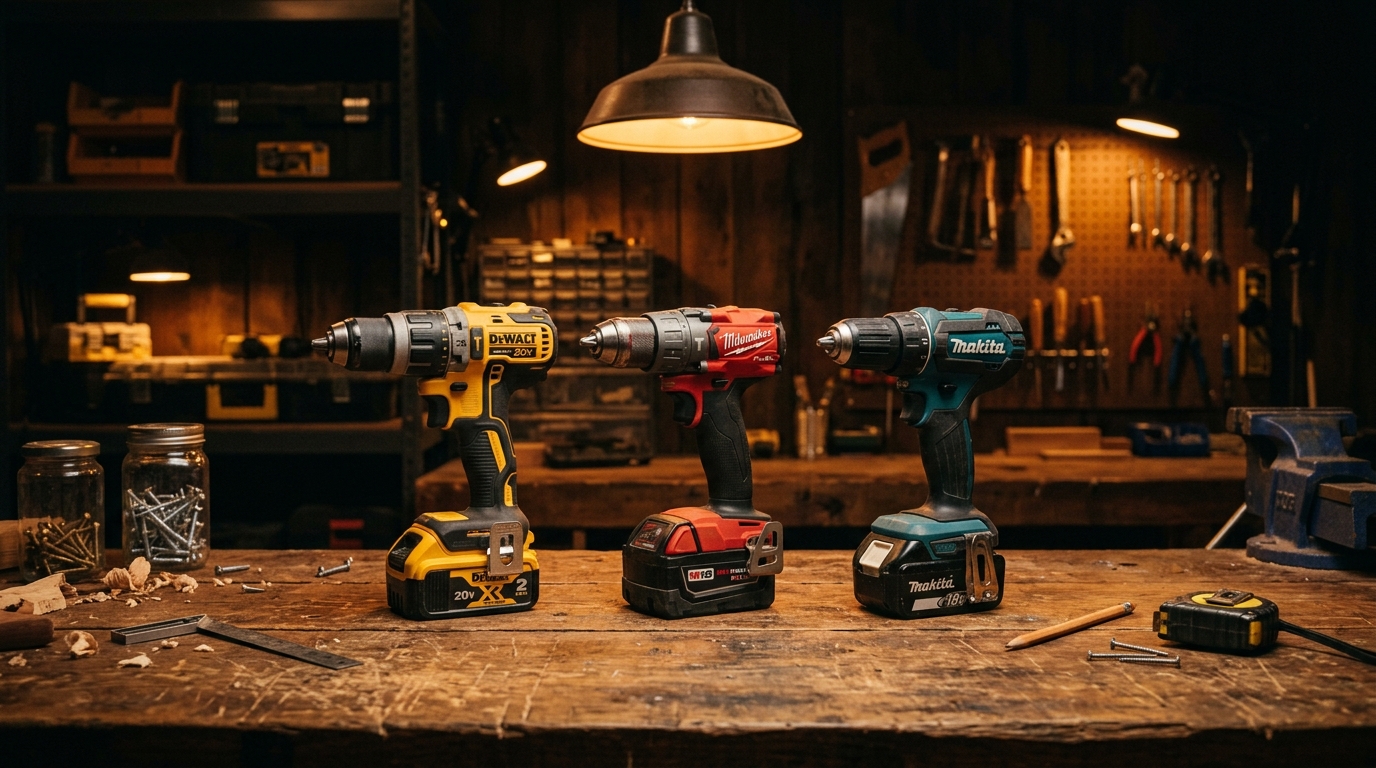
Milwaukee vs DeWalt vs Makita: Best Cordless Drill Driver Showdown 2026
We put the Milwaukee M18 FUEL, DeWalt 20V MAX XR, and Makita 18V LXT drill drivers head-to-head. Here's which one wins for pros, DIYers, and everyone in between.