How to Choose Your First Cordless Tool Platform: A No-BS Guide
Milwaukee, DeWalt, Makita, Ryobi — once you buy your first cordless tool, you're choosing a battery ecosystem you'll live with for years. Here's how to pick right the first time.

Affiliate Notice: This guide contains affiliate links. We earn a commission if you buy through these links. See our disclosure.
The most expensive mistake a first-time tool buyer makes isn't overpaying for one tool. It's picking the wrong battery platform.
Cordless tools run on proprietary battery systems. A DeWalt 20V MAX battery won't charge a Milwaukee M18 tool. A Ryobi ONE+ battery won't fit a Makita 18V. Once you own two or three batteries for a platform, you're invested — and switching means buying new batteries at $50-$120 each on top of new tools.
This guide helps you pick right from the start.
Why Platform Lock-In Matters More Than the Tools
Every major brand makes capable cordless tools. The drill in a Ryobi starter kit and the drill in a Milwaukee M18 kit will both drill holes and drive screws. At the DIY level, tool quality rarely defines which platform to choose.
What does define the choice:
- How often will you use these tools? Casual weekend use and daily professional work have very different correct answers.
- What tools do you need long-term? Some platforms have 300+ tools. Others have fewer. If you'll need a chainsaw, a jigsaw, and a miter saw eventually, ecosystem depth matters.
- What's your total battery budget? Pro-grade batteries cost more but last longer. Budget platforms have cheaper batteries but lower sustained output.
- Does anyone around you already own a platform? Compatible batteries between neighbors, family members, or coworkers is a real benefit worth hundreds of dollars.
Ryobi ONE+: The Best Starting Platform for Most DIYers
Ryobi's ONE+ system is the right answer for most first-time buyers who aren't professional tradespeople.
Why Ryobi works:
- The widest tool selection of any single cordless platform — 300+ ONE+ tools
- Cheapest batteries of any major brand: $25-$45 for a usable pack
- Combo kits under $200 that include two batteries, a drill, an impact driver, and a charger
- Covers every tool a homeowner will ever need, including chainsaws, blowers, and string trimmers
The honest tradeoff: Ryobi tools don't match Milwaukee or DeWalt in peak output or durability under sustained professional loads. A framing crew running Ryobi all day will wear out tools faster than the same crew running M18 FUEL. For a homeowner building a deck twice a year, that distinction is irrelevant.
If you're starting your first tool set, building out a garage workshop on a budget, or buying tools as a gift — Ryobi ONE+ is an easy recommendation.
Shop Ryobi ONE+ 2-Tool Combo Kit on Amazon↗DeWalt 20V MAX: The Tradespeople's Standard
DeWalt has the largest installed base among US tradespeople. If you work in construction, electrical, plumbing, or HVAC, there's a reasonable chance your coworkers are already running 20V MAX — which means compatible batteries available everywhere on a job site.
Why DeWalt works:
- Massive tool selection with specialized tools for nearly every trade
- Three tiers (Standard, XR, ATOMIC) let you right-size cost vs performance
- 20V MAX batteries are the most widely available batteries to buy used or borrow
- FlexVolt system lets you use 60V batteries in 20V tools for extended runtime on demanding applications
The honest tradeoff: Standard 20V MAX (the basic tier) doesn't match Milwaukee's pro-grade output. Serious work requires XR-tier tools, which carry a higher price tag. Budget accordingly.
For tradespeople, serious DIYers, and anyone who values the widest ecosystem with the easiest battery-sharing on job sites, DeWalt is the natural choice. See the DeWalt 20V MAX vs XR vs ATOMIC guide to right-size your tier within the DeWalt ecosystem.
Shop DeWalt 20V MAX 2-Tool Combo Kit on Amazon↗Milwaukee M18: When Your Work Is Demanding
Milwaukee's M18 FUEL lineup sets the benchmark for professional cordless performance. The M18 FUEL impact driver delivers 2,000 in-lbs of torque. The M18 FUEL circular saw cuts like a corded tool. For heavy-duty professional work — framing, concrete drilling, long daily sessions — Milwaukee tools consistently outperform the competition.
Why Milwaukee works:
- M18 FUEL sub-line delivers best-in-class output across nearly every tool category
- One-Key wireless tool tracking and customizable tool settings
- Platform extends into M12 (compact) and MX FUEL (commercial-grade) for genuine system depth
- Highest durability ceiling of any platform under professional daily loads
The honest tradeoff: Milwaukee is the most expensive platform to enter. Good batteries run $60-$150. A starter combo kit costs $200-$250. If you're outfitting a weekend hobby shop, you're paying a premium you likely won't recover in performance.
Milwaukee is the correct choice for contractors, serious tradespeople, and tool enthusiasts who run tools hard and need maximum reliability over years of daily use.
Shop Milwaukee M18 2-Tool Combo Kit on Amazon↗Makita 18V LXT: For Woodworkers and Finish Carpenters
Makita's 18V LXT system is the preferred platform among woodworkers and finish carpenters for a specific reason: Makita makes the best woodworking-specific cordless tools in any platform.
The Makita 18V trim router, the brushless random orbital sanders, the compact circular saws — these tools are tuned for precision work in a way that Milwaukee and DeWalt equivalents aren't quite. Makita tools also tend to have better ergonomics and lower vibration than their counterparts.
Why Makita works:
- Strongest woodworking cordless lineup: trim routers, track saws, sanders, jigsaws
- Excellent tool ergonomics and lower vibration across the lineup
- 40V XGT platform available for heavy-duty tools while LXT handles finish work
- Strong in HVAC, plumbing, and automotive as well
The honest tradeoff: Makita has fewer general-contractor-focused tools than DeWalt or Milwaukee in the North American market. The newer 40V XGT system also creates long-term platform questions.
For cabinet makers, furniture builders, and finish carpenters, Makita LXT is worth serious consideration over the alternatives.
Shop Makita 18V LXT Combo Kit on Amazon↗Quick Decision Framework
| Your Situation | Best Platform |
|---|---|
| Homeowner, light use, budget-conscious | Ryobi ONE+ |
| Tradesperson or job-site worker | DeWalt 20V MAX |
| Heavy daily professional use | Milwaukee M18 |
| Woodworking and finish carpentry focus | Makita 18V LXT |
| Already have coworkers on a specific platform | Match their platform |
What to Buy First
Whichever platform you choose, start with a two-tool combo kit — drill/driver plus impact driver. This combination handles 80% of everything most people do with cordless tools. Combo kits include two batteries and a charger at better value than buying components separately.
Don't buy batteries alone. Don't buy bare tools without batteries. Start with a kit, get a feel for the platform, then expand.
Once you know your platform, the BenchLoot tool finder lets you compare specific tools side by side, and the loot kits section has curated starter sets at different budget levels.
Pro Tip
Bottom Line
The platform decision matters more than the tools themselves at the entry level. Pick Ryobi if you're a casual DIYer watching costs. Pick DeWalt if you're on job sites with other tradespeople. Pick Milwaukee if your work demands maximum output day after day. Pick Makita if woodworking precision is your priority.
The worst move is buying a single tool from four different brands and ending up with four incompatible battery systems and none of the ecosystem benefits.
Pick one. Start with a kit. Build from there.
You Might Also Like

Best Cordless Circular Saws 2026: Pro vs DIY Models Compared
Milwaukee M18 FUEL, DeWalt 20V MAX, and Makita 18V LXT circular saws compared across power, blade size, price, and who each one actually fits.

Milwaukee Packout vs DeWalt ToughSystem 2.0 vs Ridgid Pro Gear: Modular Storage Showdown 2026
Three modular tool storage systems compared: Milwaukee Packout, DeWalt ToughSystem 2.0, and Ridgid Pro Gear. Which one belongs on your job site?
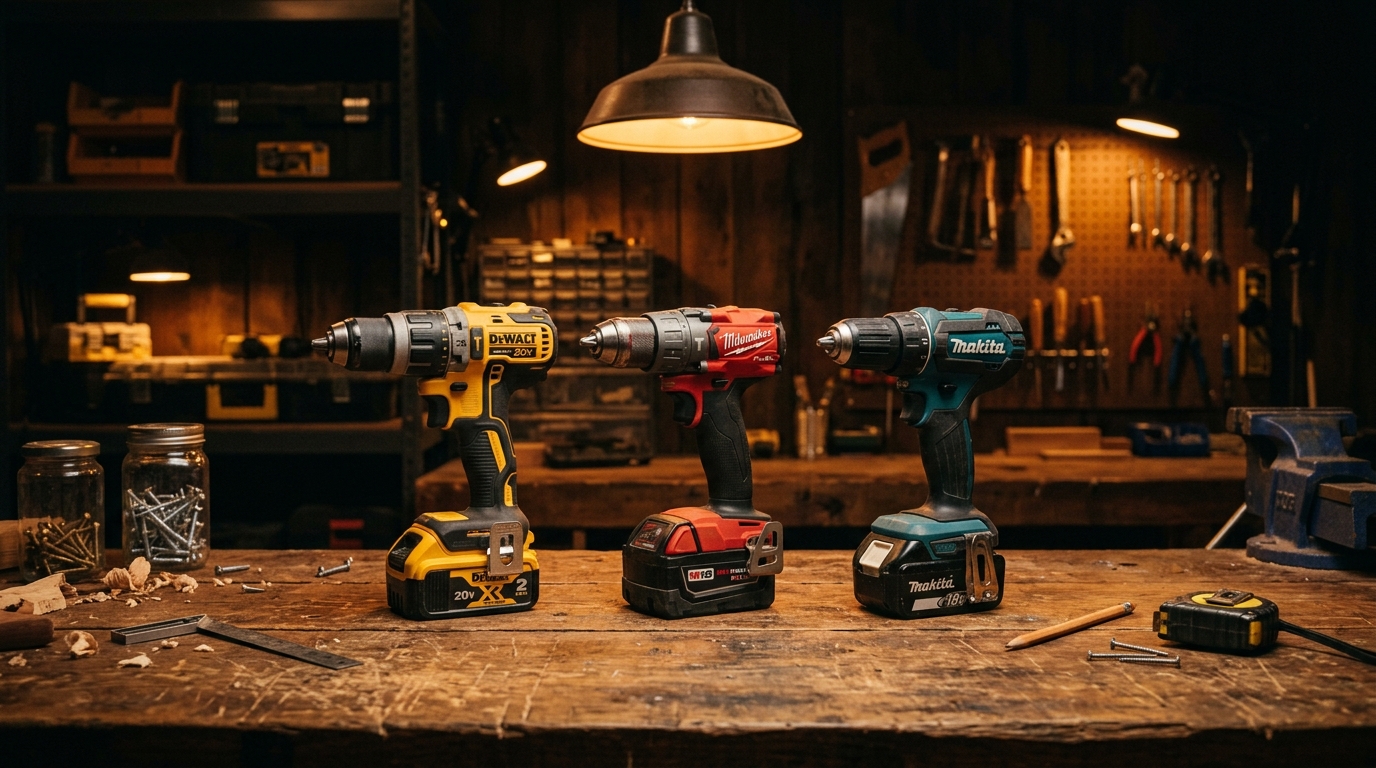
Milwaukee vs DeWalt vs Makita: Best Cordless Drill Driver Showdown 2026
We put the Milwaukee M18 FUEL, DeWalt 20V MAX XR, and Makita 18V LXT drill drivers head-to-head. Here's which one wins for pros, DIYers, and everyone in between.