DeWalt DCS334B Review: The Cordless Jigsaw That Actually Replaced My Corded One
After years of tolerating a corded jigsaw, the DCS334B changed my mind about cordless. Here's what makes it worth the upgrade.

Affiliate Notice: This guide contains affiliate links. We earn a commission if you buy through these links. See our disclosure.
Quick Verdict
I held onto my corded jigsaw for a long time out of habit. Jigsaws run continuously under load, I told myself — they need the cord. Then I used the DCS334B on a cabinet door project that required me to reach awkward angles around an assembled carcass, and the cord argument evaporated. I've been cutting cordless ever since.
Here's what three years of furniture and trim work has taught me about this saw.
Why the Brushless Motor Actually Matters Here
Jigsaws are hard on motors. The blade reverses direction thousands of times per minute under load, and brushed motors generate real heat doing it. The brushless motor in the DCS334B runs cooler and longer — I've done extended cutting sessions on curved templates without the saw slowing or the motor housing getting hot enough to notice.
Runtime is also meaningfully better than brushed cordless jigsaws I've used. On a 2Ah battery, I can cut a full afternoon of curved work in 3/4-inch hardwood before needing a swap. That's the practical test.
Four Orbital Settings: Use All of Them
Orbital action gets overlooked in jigsaw comparisons, but it's the setting that most affects cut quality and speed. The DCS334B has four positions:
- 0 (straight): Slowest cut, cleanest edge. Use this for fine finish work, thin materials, and cutting on a finished face.
- 1–2: General woodworking. Good balance of speed and surface quality for furniture parts.
- 3: Fast and aggressive. Good for rough cuts in thick material where you'll clean up the edge afterward.
Most saws stay on setting 2 and call it done. Having the full range matters on a jigsaw more than most tools because you're often switching between cutting thick oak and trimming a thin plywood panel in the same session.
Cut Quality and Blade Choices
The anti-splinter insert is a small feature that earns its keep. It closes the gap around the blade at the shoe, which dramatically reduces tearout on the top face of the cut. On a face panel or door that gets a finish, this makes a visible difference versus running without it.
Blade selection still does most of the work. I run a 10 TPI blade for general hardwood cuts and switch to 20 TPI for clean edges in plywood. The T-shank system accepts any brand — you're not locked into DeWalt blades, which matters when you find a blade profile you like from a different manufacturer.
Bevel Cuts
The shoe bevels 0–45 degrees via a tool-free lever. It holds position firmly and the scale is accurate enough for most work — I've verified it with a square and found it within half a degree. For precise miter work I still use a dedicated saw, but for the occasional angled cut this is more than adequate.
How It Compares to the DCS331
The DCS331 is the brushed predecessor — still sold, cheaper, and functional. The DCS334B is worth the upgrade for two reasons: the brushless motor runs noticeably cooler over extended sessions, and the anti-splinter insert is a real feature the DCS331 lacks. If you're doing light occasional work, the DCS331 is fine. For regular furniture or trim use, the brushless motor pays for itself in runtime and longevity.
What It Doesn't Do Well
Battery selection affects handling. The DCS334B is manageable with a 2Ah compact battery and slightly front-heavy with a 5Ah. For extended sessions I'll take the runtime trade-off, but for delicate, slow template work the compact battery improves control.
The shoe finish is bare metal with a thin coating that scratches on rough material. This doesn't affect function, but if you're sliding the shoe across finished surfaces, use masking tape to protect the workpiece.
It's also a bare tool — you'll need to budget for a battery and charger if you're starting the 20V platform fresh.
Bottom Line
The DCS334B earns its place in the shop not because it's the fanciest jigsaw, but because it doesn't make compromises that matter. The brushless motor runs all day, the orbital settings are genuinely useful, and the anti-splinter insert keeps finish quality where it needs to be for furniture work. If you're on the DeWalt 20V platform, this is the jigsaw to own.
Also on the DeWalt 20V platform: see our DeWalt DCF887 impact driver review and DeWalt DWP611PK compact router review. Compare cordless jigsaws or use the tool finder to match the right saw to your work.
Shop DeWalt DCS334B on Amazon↗You Might Also Like
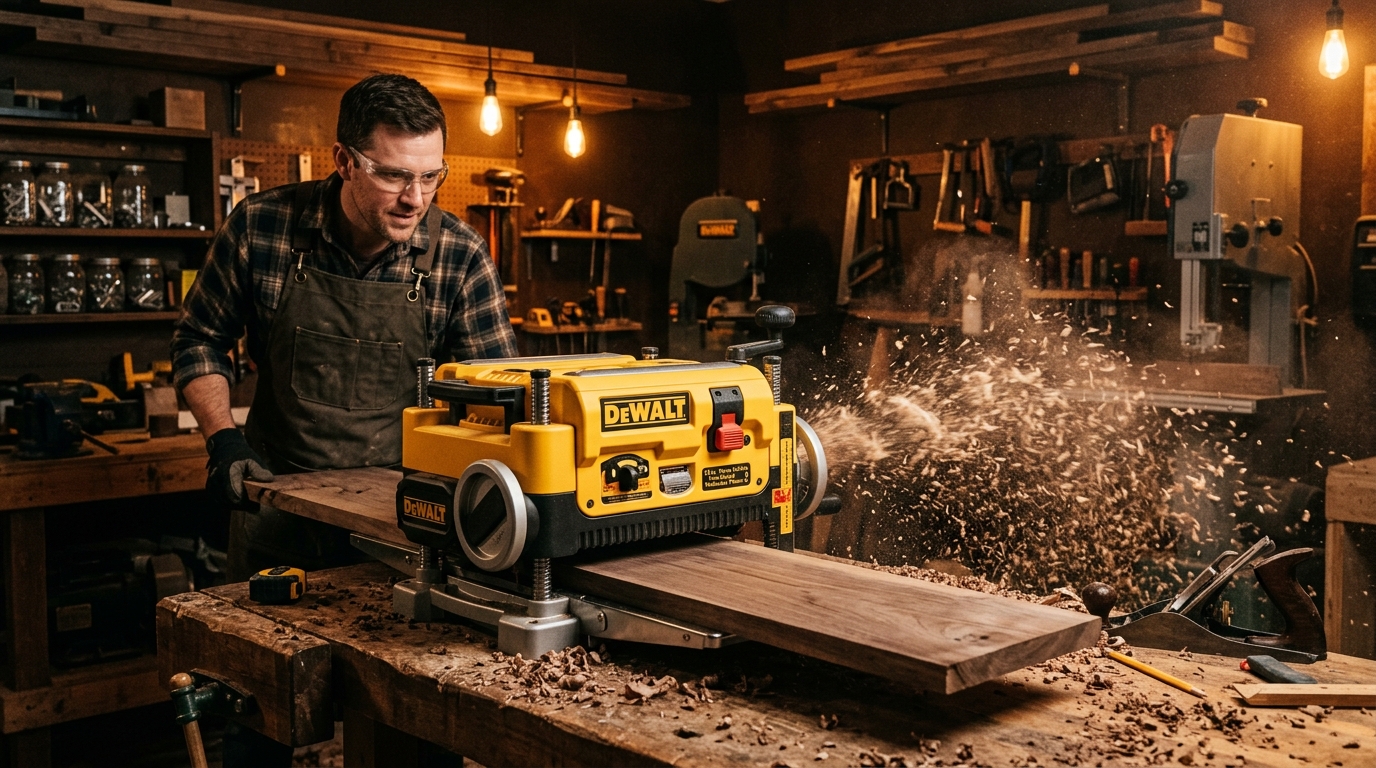
DeWalt DW735X 13-Inch Planer Review: The Bench Planer Most Woodworkers Should Own
The DeWalt DW735X is a 13-inch, two-speed benchtop planer with a three-knife cutter head that handles hardwood surfacing without hesitation. Here's how it performs in a working shop.

DeWalt DWP611PK Compact Router Review: The Fixed/Plunge Combo That Actually Works
The DeWalt DWP611PK gives you a fixed base and plunge base for $169 — making it one of the best-value router setups for woodworkers who want versatility without spending $300+.

WEN 4214T 12-Inch Drill Press Review: The Best Budget Drill Press You Can Actually Buy
The WEN 4214T is a 12-inch variable speed benchtop drill press with laser, LED, and cast iron construction for under $200. Here's how it holds up in a real shop.