DeWalt DWE7491RS Review: The Best Jobsite Table Saw for Most Woodworkers
After years of using the DWE7491RS as my primary shop saw, here's what it's great at, where it falls short, and who should buy it.

Affiliate Notice: This guide contains affiliate links. We earn a commission if you buy through these links. See our disclosure.
I bought this saw about three years ago to replace an aging benchtop unit, and it's been the workhorse of my shop ever since. The DWE7491RS sits in a strange but useful middle ground — portable enough to roll out to the driveway for dusty rip cuts, but capable enough for most of what a serious hobbyist or light-duty contractor throws at it.
Here's my honest take after a few hundred board-feet of use.
What You Get Out of the Box
The RS in the model name stands for the rolling stand, which is the version worth buying. The stand deploys in seconds, locks solid, and the wheels actually roll on rough concrete without catching. It's not the flimsy fold-out you'd expect at this price — it has a tested weight rating of 300 pounds and feels like it.
Inside the box: the saw, rolling stand, blade guard assembly, rip fence, miter gauge, two push sticks, and a blade wrench. DeWalt includes a 24-tooth carbide blade that's passable for initial testing but you'll want to swap it for a quality 40-tooth combination or 50-tooth general purpose blade pretty quickly.
Fence: The Real Selling Point
The rack-and-pinion telescoping fence system is what separates this saw from cheaper contractor options. It adjusts smoothly, locks with a single lever, and has stayed accurate to within a 32nd of an inch across three years of use. I've never had to re-square it after transport — and I've moved this saw in the back of a truck more than once.
The fence itself is 32.5 inches to the right of the blade and 22 inches to the left, which covers sheet goods if you support the outfeed. That's a spec most saws in this price range can't match.
Fence Accuracy Check
- Lock and run a test cut, then verify with a reliable square. Mine came from the factory within 1/64-inch parallel to the blade — better than expected.
Motor and Cut Quality
The 15-amp motor handles hardwood rips without bogging, including 8/4 (two-inch thick) white oak, which I use regularly. It doesn't have the raw torque of a cabinet saw, but for furniture-grade lumber in typical widths you'll rarely feel it work.
At 4,800 RPM with a quality 40-tooth blade, cross cuts are clean enough for furniture parts that go right to the glue-up. Tearout on the bottom face is minimal with sharp blades — use a zero-clearance insert for even cleaner results.
The dust collection port is a 2.5-inch port on the rear. It captures maybe 60-70% of the dust with a shop vac. That's about average for an open-base contractor saw — don't expect cabinet-saw-level containment.
The Stand: Better Than It Looks
The rolling stand drew skepticism when I first deployed it, but it's held up. The legs adjust for uneven surfaces, the locking mechanism is solid, and the weight distribution keeps the saw from tipping during cuts. I've had it set up on sloped driveways and garage floors without issue.
Fold-down takes about 10 seconds once you're practiced. For contractors who load and unload daily, this matters.
Best For
- Small shop or garage woodworkers who want portability
- Contractors who need a reliable jobsite saw
- Sheet goods ripping and general furniture dimensioning
Skip If
- Your work demands cabinet-saw precision (± 0.005")
- You need dado stack compatibility out of the box
- You have space and budget for a hybrid or cabinet saw
What Falls Short
Miter gauge. The included gauge is basic — it works but it's not accurate enough for precise crosscuts without a separate sled or aftermarket gauge. Budget $50-80 for an Incra or Woodpecker upgrade and you'll be much happier.
Dado compatibility. The DWE7491RS does accept an 8-inch dado stack, but it requires removing the blade guard and using a dado insert (sold separately). Not a dealbreaker, but plan for it.
Fence travel. At 32.5 inches right-of-blade, you're not ripping full sheet goods without an outfeed table or roller stand. The fence can't extend further — that's a physical constraint of the design.
Dust collection. Passable with a shop vac. If you want real containment, look into an aftermarket shroud or plan to sweep frequently.
How It Compares
The natural comparison is the Ridgid R4520 (which I also own and reviewed separately — compare them side by side). The Ridgid has a granite-composite top, which stays flatter in humid conditions and is more scratch-resistant. The DeWalt wins on fence travel and portability. If you're shop-based and price is close, I'd lean Ridgid. If you need to move the saw, DeWalt.
At this price point, the Bosch 4100XC-10 is also worth a look — excellent fence, but heavier and more expensive. The DWE7491RS hits a better sweet spot for most buyers.
Bottom Line
The DWE7491RS is the saw I'd recommend to someone building out a first real shop or a contractor who needs reliable, portable capacity. The fence alone is worth the price premium over cheaper options. It's not a cabinet saw — it won't behave like one — but for furniture-grade work in a small shop, it punches well above its weight class.
Building out the rest of your shop? See our DeWalt DW735X planer review and DeWalt DWP611PK router review. Not sure which table saw fits your setup? Try the BenchLoot tool finder.
Shop DeWalt DWE7491RS on Amazon↗You Might Also Like
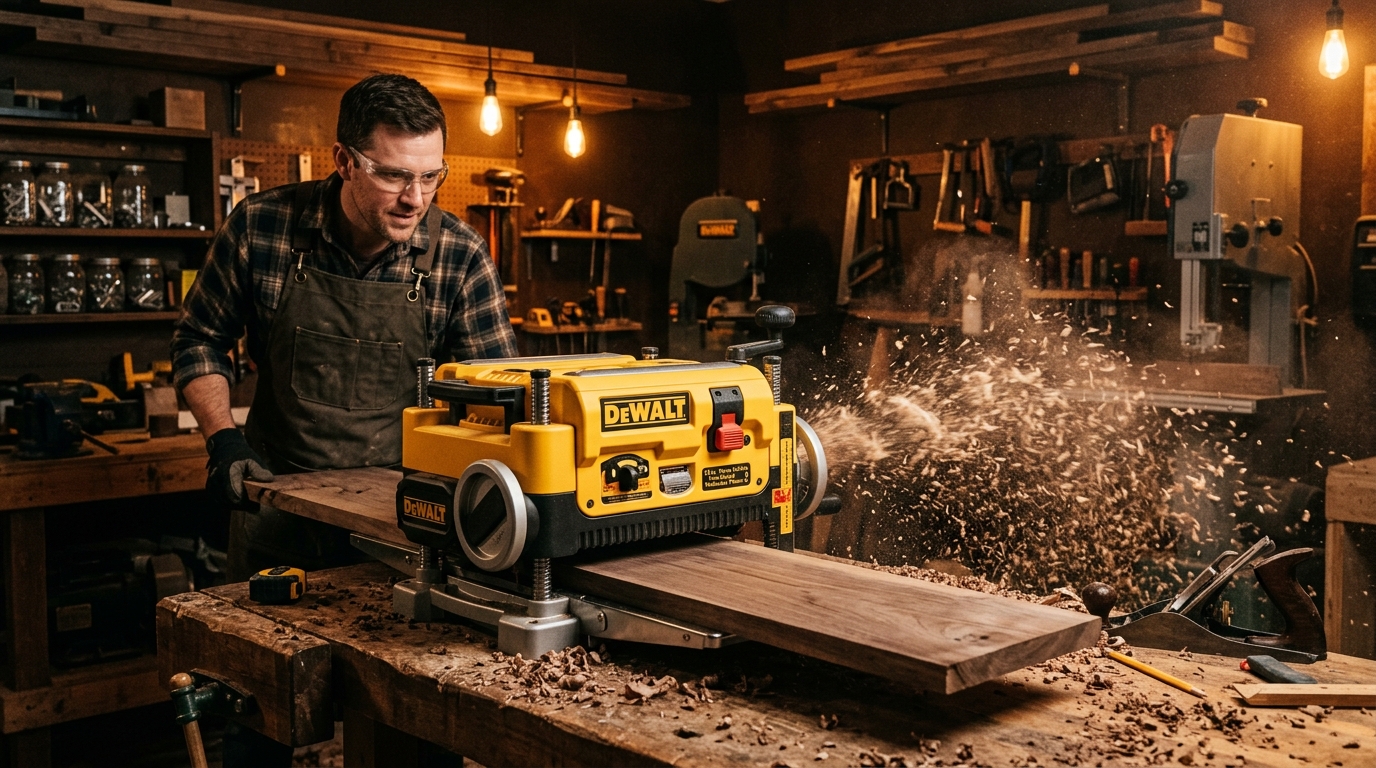
DeWalt DW735X 13-Inch Planer Review: The Bench Planer Most Woodworkers Should Own
The DeWalt DW735X is a 13-inch, two-speed benchtop planer with a three-knife cutter head that handles hardwood surfacing without hesitation. Here's how it performs in a working shop.

DeWalt DWP611PK Compact Router Review: The Fixed/Plunge Combo That Actually Works
The DeWalt DWP611PK gives you a fixed base and plunge base for $169 — making it one of the best-value router setups for woodworkers who want versatility without spending $300+.

WEN 4214T 12-Inch Drill Press Review: The Best Budget Drill Press You Can Actually Buy
The WEN 4214T is a 12-inch variable speed benchtop drill press with laser, LED, and cast iron construction for under $200. Here's how it holds up in a real shop.