Festool ETS 125 REQ Review: Is a $300 Sander Actually Worth It?
I resisted the Festool price tag for years. After two years of use, here's my honest answer on whether the ETS 125 REQ justifies the cost over a $70 alternative.

Affiliate Notice: This guide contains affiliate links. We earn a commission if you buy through these links. See our disclosure.
Quick Verdict
I bought my first Festool sander the way most woodworkers do — reluctantly, after years of arguing the price wasn't justified. A customer piece with a high-gloss lacquer finish changed my position. I spent an hour hunting swirl marks that my Bosch had left, and the next day I ordered the ETS 125.
Two years later, here's what I actually think.
The Surface Quality Difference Is Real
This is the core claim Festool makes, and it holds up. The ETS 125 REQ leaves a surface with fewer swirl marks and more consistent scratch patterns than any budget random orbit sander I've used.
The reason is the combination of the 3mm orbit size and the motor's ability to maintain consistent pad speed under load. Budget sanders slow down when you apply pressure — the pad speed drops, the orbit pattern becomes irregular, and that's where swirl marks come from. The ETS 125 maintains its speed under reasonable pressure without noticeable slowdown.
In practice: I can take a flat panel from 120-grit to 180-grit to 220-grit and put a first coat of finish on it with confidence. With my old Bosch, I ran a quick hand-scraper pass before coating because I didn't fully trust what the sander had left. I don't do that anymore with the Festool.
When Does the Price Difference Not Matter?
On shop cabinets, lumber storage racks, or anything getting paint: the difference is invisible. A $70 orbital will sand paint-grade work just fine. I still use my Bosch for anything that isn't a finish piece.
Dust Collection: The Real Selling Point
The dust collection on the ETS 125 REQ is the feature that converts skeptics more than surface quality. With a Festool CT dust extractor, dust capture approaches 95% — close enough that I sand indoors on pieces I care about without worrying about the finish room getting contaminated.
The built-in dust bag that ships with the sander is mediocre. It fills fast and the fine dust escapes. Skip it and connect directly to a CT extractor. If you don't have one, the dust collection advantage over a Bosch is marginal — both will clog their bags at similar rates.
The 27mm hose connection is standard Festool — it clicks onto CT extractors and stays put. No adapter gymnastics, no hose falling off during a pass.
Ergonomics After Long Sessions
At 2.9 lbs, the ETS 125 is light. The vibration dampening is noticeably better than budget alternatives — after a two-hour finish sanding session, my hand doesn't fatigue the way it did with the Bosch on comparable work.
The variable speed dial runs from 3,000 to 6,800 OPM. I run 5,500–6,000 for most hardwood work and drop to 3,500–4,000 on veneer or thin panels where I want more control. The range is useful; I actually change the setting depending on what I'm sanding.
The Abrasive Question
Festool Rubin and Granat abrasives are genuinely better than the generic hook-and-loop pads from hardware stores — longer lasting, more consistent cut rate, less clogging. They're also $15–20 for a 50-pack versus $8–10 for generic. If you're running this sander daily, buy Festool abrasives in bulk. If you're a weekend woodworker, the cost per session is low enough that it's a non-issue.
Third-party abrasives with standard 5-hole or 8-hole Festool patterns work — I've used Mirka Abranet with good results on open-grain hardwoods.
Is It Worth the Price?
For furniture that gets a film finish — lacquer, polyurethane, catalyzed finishes — yes. The surface quality difference is visible in the final piece. For everything else, no. The Bosch ROS20VSC at $70 is a genuinely good sander. It just isn't this.
The math that made sense for me: I was spending 30–45 extra minutes per piece on swirl mark removal. Time has value. The ETS 125 eliminated that step.
If you're evaluating finishing tools, also see our DeWalt DWP611PK compact router review for edge work. Compare random orbit sanders or use the tool finder to match the right sander to your finishing goals.
Shop Festool ETS 125 REQ on Amazon↗You Might Also Like
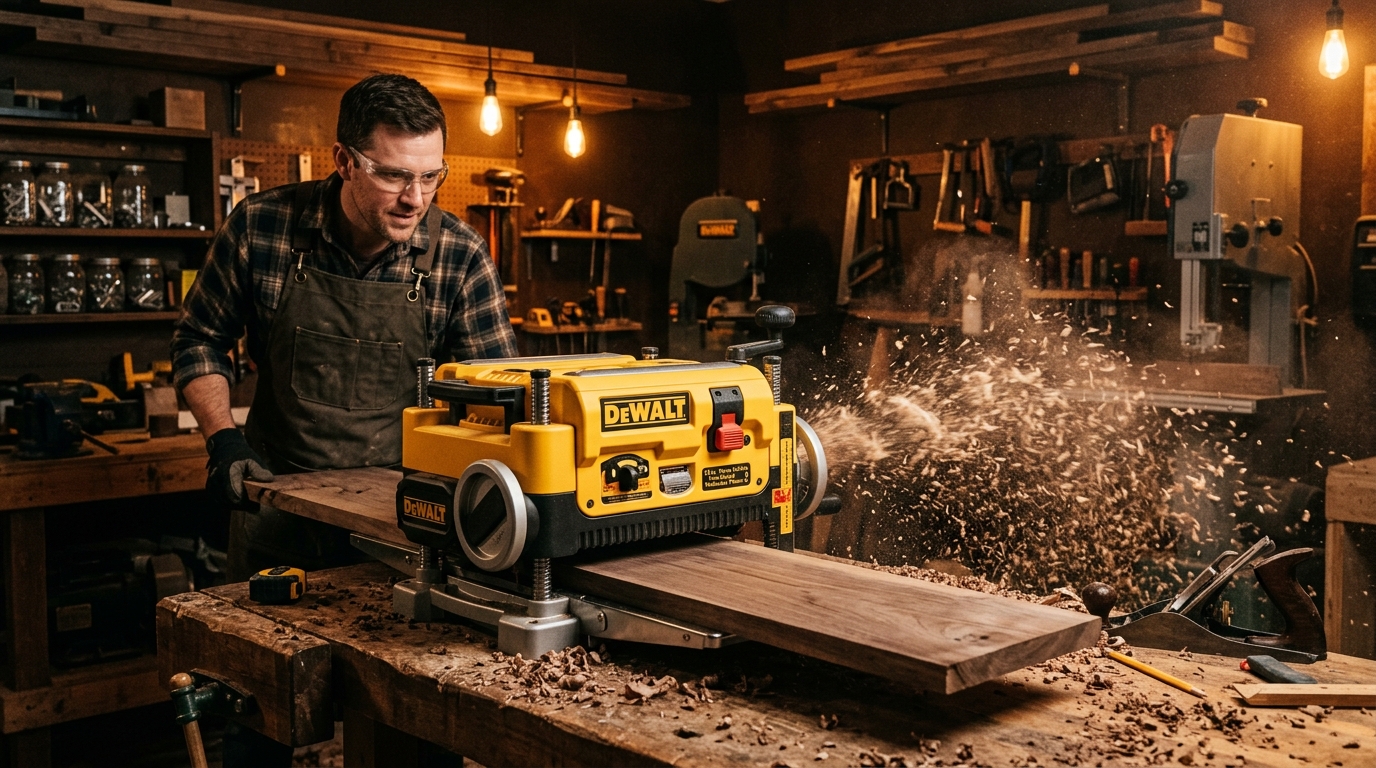
DeWalt DW735X 13-Inch Planer Review: The Bench Planer Most Woodworkers Should Own
The DeWalt DW735X is a 13-inch, two-speed benchtop planer with a three-knife cutter head that handles hardwood surfacing without hesitation. Here's how it performs in a working shop.

DeWalt DWP611PK Compact Router Review: The Fixed/Plunge Combo That Actually Works
The DeWalt DWP611PK gives you a fixed base and plunge base for $169 — making it one of the best-value router setups for woodworkers who want versatility without spending $300+.

WEN 4214T 12-Inch Drill Press Review: The Best Budget Drill Press You Can Actually Buy
The WEN 4214T is a 12-inch variable speed benchtop drill press with laser, LED, and cast iron construction for under $200. Here's how it holds up in a real shop.