Build Your Dream Workshop on a $500 Budget: The Practical Starter Plan
Five hundred dollars won't buy you everything, but it will buy you a functional shop capable of real furniture, repairs, and weekend builds. Here's exactly how to spend it.

Affiliate Notice: This guide contains affiliate links. We earn a commission if you buy through these links. See our disclosure.
Five hundred dollars sounds like a lot until you start pricing tools. A cordless drill/impact combo, a circular saw, a workbench, and a basic set of hand tools can easily run $600-$700 at retail.
The good news: with smart prioritization, $500 buys a genuinely functional shop. Not a dream shop — but a capable one that handles furniture builds, home repairs, framing projects, and most of what beginners actually want to make.
Here's how to spend it.
What $500 Can and Can't Buy You
Set realistic expectations before spending anything:
$500 gets you:
- A reliable cordless drill and impact driver
- A circular saw (the most versatile cutting tool for the money)
- A stable work surface
- Enough clamps to glue up a panel
- Basic hand tools and measuring gear
- Safety equipment
- Power management for the bench
$500 doesn't get you:
- A table saw (cheapest functional ones start around $350-$400 alone)
- A random orbital sander and router (those come in the next $200-$300)
- A dust collection system
- A drill press
That's not a dealbreaker — hundreds of beautiful projects get built without a table saw. A circular saw with a good straightedge guide cuts sheet goods accurately. For the first year of building, the list below will handle most of what you want to make.
Priority 1: The Cordless Combo Kit (~$150)
A drill/driver and impact driver combo kit is the foundation of any shop. You need these for assembly, cabinet building, deck work, and hardware installation. Buying them as a kit gives you two batteries and a charger at lower cost than buying individually.
At the $500 budget level, Ryobi ONE+ is the correct platform. The batteries are the cheapest in the industry ($25-$40 for a good pack), the tool selection is the widest of any platform (300+ tools), and the combo kits consistently go on sale at hardware stores. Use the tool finder to compare combo kits across platforms, or see the cordless platform guide if you're weighing Ryobi against DeWalt or Milwaukee.
Shop Ryobi ONE+ Drill and Impact Driver Combo on Amazon↗What to look for in the kit: Two batteries (not one), a charger, and at least one bit set included. If the kit doesn't include bits, add a basic 40-piece set for $12-15.
Priority 2: A Circular Saw (~$60 bare tool or $120 as a kit)
A circular saw is the single most versatile cutting tool you can own. It cuts lumber to length, breaks down plywood sheets, handles rough framing, and with a guide rail or clamped straightedge, it makes accurate rip cuts through sheet goods.
If you already have Ryobi batteries from the combo kit above, buy the bare tool (no battery or charger included) — it's significantly cheaper.
Shop Ryobi ONE+ HP Brushless Circular Saw on Amazon↗Tip: Buy a 24-tooth general-purpose blade as your first upgrade ($10-15). The blade that ships with budget saws is usually adequate but not ideal. A sharp 24-tooth framing blade is faster and cleaner for most cuts.
Priority 3: A Work Surface (~$80-$120)
You can't build without something to build on. A portable folding workbench is better than a fixed bench for a starter shop — you can move it outside for messy work, store it flat when not in use, and upgrade to a proper bench later.
The Keter Jobmade portable workbench is a popular choice at this price point. It includes built-in clamping slots, a pegboard-style top for accessories, and folds flat for storage.
Shop Keter Folding Workbench on Amazon↗Alternatively, a solid-core door blank ($30-40 at a lumber yard) on top of two sawhorses ($25-30 each) gives you more surface area at similar cost — and the door blank makes an excellent glue-up surface.
Priority 4: Clamps (~$40-$60)
No clamps, no glue-ups. No glue-ups, no furniture.
For a starter set, buy a mix of:
- 4x F-clamps (6-inch) — the most versatile all-purpose clamp for face frames, edge gluing, assembly
- 4x spring clamps — quick-release for light work, holding parts while glue tacks up, and securing jigs
- 2x bar clamps (24-inch) — for panel glue-ups and wider assemblies
Priority 5: Hand Tools and Measuring (~$50-$70)
These aren't glamorous, but no shop functions without them:
- Tape measure (25-foot, self-locking): Stanley FatMax or Milwaukee are the reliable picks in this category
- Combination square (12-inch): for marking 90-degree and 45-degree lines; also functions as a depth gauge
- Utility knife with extra blades: scribing, marking, cutting sheathing and packaging
- Carpenter's pencil and marking knife: pencil for rough marks, knife for precise layout
- Hammer (16 oz claw): framing and general assembly
- Level (24-inch torpedo): wall mounting, shelf installation, assembly checking
Priority 6: Safety Equipment (~$20-$30)
Non-negotiable. Buy these before you buy anything else — or at least at the same time.
- Safety glasses (ANSI Z87.1 rated): $8-12; keep a pair at the bench and a spare in your kit bag
- Hearing protection (NRR 25+): foam earplugs are fine, but earmuffs are easier to put on and off repeatedly
- Dust mask (N95 minimum): for sanding, cutting MDF, and any wood dust exposure
Don't skip this category to save $25. Wood dust is a Class A carcinogen and circular saws produce chips that travel at head height.
Priority 7: Power Strip and Extension Cord (~$20-$30)
A 12-gauge, 50-foot extension cord handles high-draw tools (circular saws, shop vacs) without voltage drop. A heavy-duty power strip with surge protection at the bench keeps everything accessible without running to the wall outlet.
Shop 50-Foot 12-Gauge Extension Cord on Amazon↗The Full $500 Shopping List
| Item | Budget |
|---|---|
| Ryobi ONE+ Drill + Impact Driver Combo | $150 |
| Ryobi ONE+ HP Circular Saw (bare tool) | $70 |
| Keter Folding Workbench | $90 |
| F-clamps (4x), spring clamps (4x), bar clamps (2x) | $55 |
| Hand tools and measuring (tape measure, square, hammer, level, utility knife) | $60 |
| Safety glasses, hearing protection, dust masks | $25 |
| Extension cord and power strip | $25 |
| Total | ~$475 |
The remaining $25 buys your first box of screws and a bottle of wood glue — the consumables you'll reach for on every project.
How to Stretch Further: Used Tools and Sale Timing
If you're patient, $500 goes significantly further through the used market.
Facebook Marketplace and Craigslist regularly list estate-sale tools in good condition. Look for name-brand cordless tools with dead batteries — you can often buy the tool for $10-$30, then add a $35 Ryobi battery and charger if you're on that platform, or a compatible aftermarket battery for any major brand.
Sale timing matters: Ryobi has deep sales at Home Depot during spring (April-May), Father's Day, and Black Friday. Combo kits that retail for $150 regularly hit $100 during these windows. Waiting 4-6 weeks to time a sale can free up $50-$75 for an extra tool.
See the tool deals calendar for the full seasonal breakdown.
Pro Tip
What to Buy Next
Once you have the foundation in place, the next $200-$300 typically goes toward:
- Random orbital sander (~$60) — finish sanding by hand is tedious; a 5-inch orbital changes your finish quality immediately
- Router kit (~$100-$150) — for edge profiles, dadoes, and joinery
- Better clamps — you will always need more clamps than you own
Browse the beginner woodworking loot kit for a prioritized upgrade path once the basics are covered.
Bottom Line
A $500 workshop isn't a dream shop. It's a capable, functional setup that lets you build real things — furniture, shelving, home improvements, weekend projects. The list above prioritizes tools that handle the widest range of tasks for the lowest combined cost.
Buy the combo kit first. Build the habit. Upgrade as you understand what you actually need.
You Might Also Like
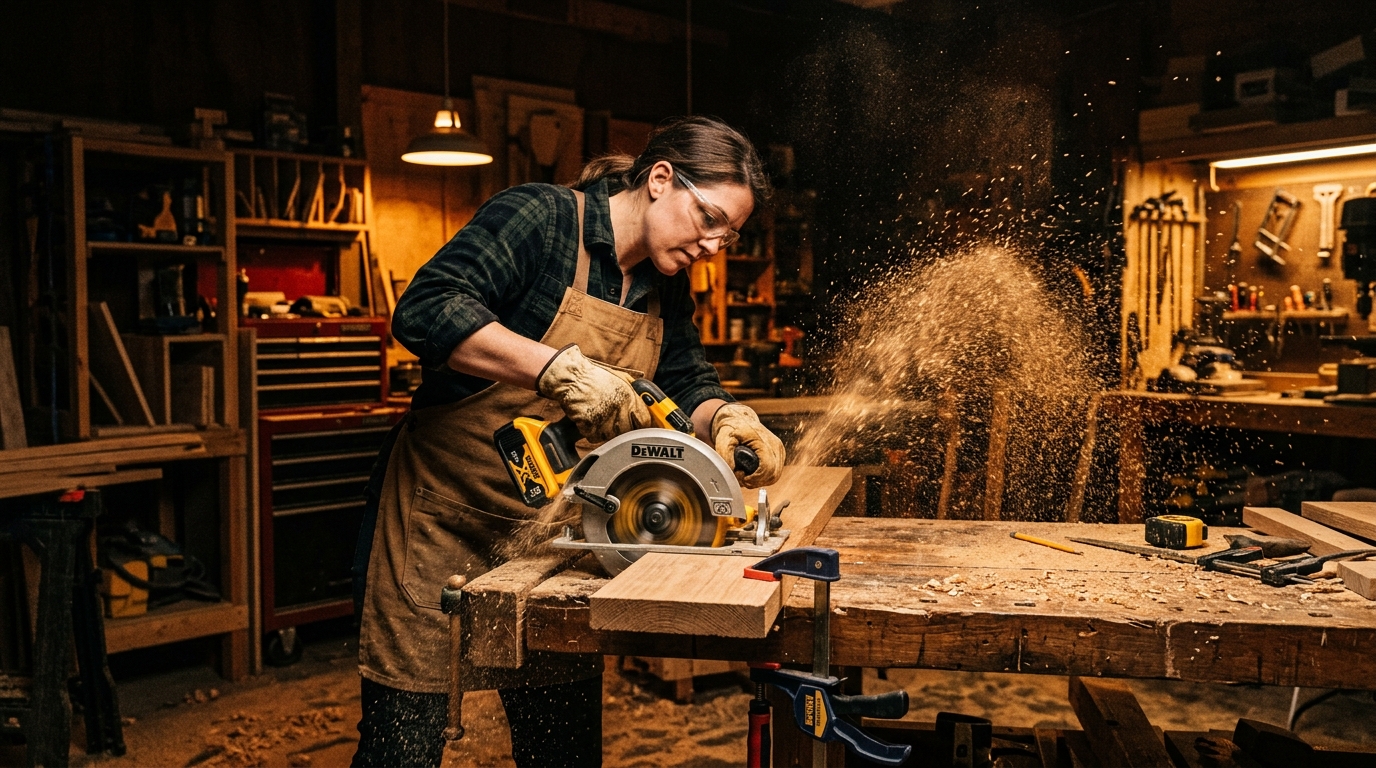
Best Cordless Circular Saws 2026: Pro vs DIY Models Compared
Milwaukee M18 FUEL, DeWalt 20V MAX, and Makita 18V LXT circular saws compared across power, blade size, price, and who each one actually fits.
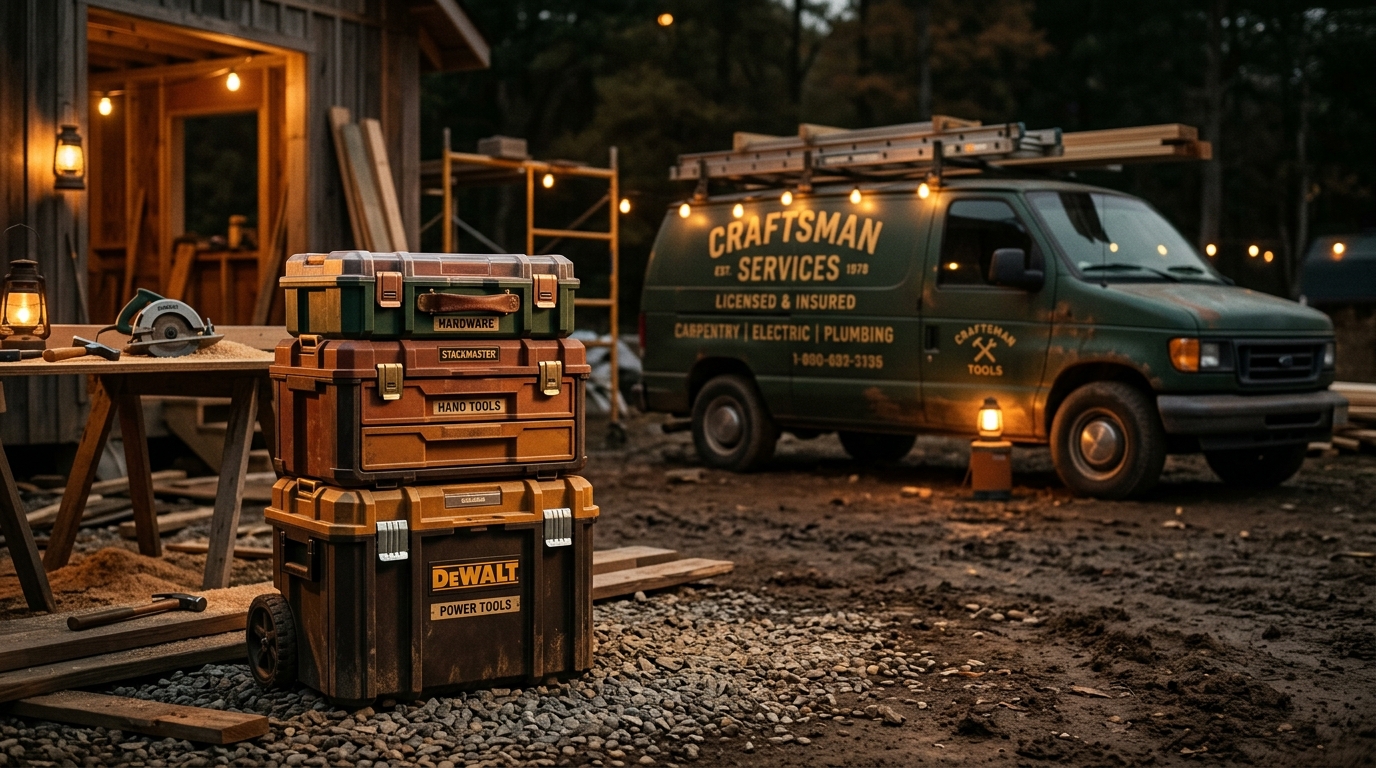
Milwaukee Packout vs DeWalt ToughSystem 2.0 vs Ridgid Pro Gear: Modular Storage Showdown 2026
Three modular tool storage systems compared: Milwaukee Packout, DeWalt ToughSystem 2.0, and Ridgid Pro Gear. Which one belongs on your job site?
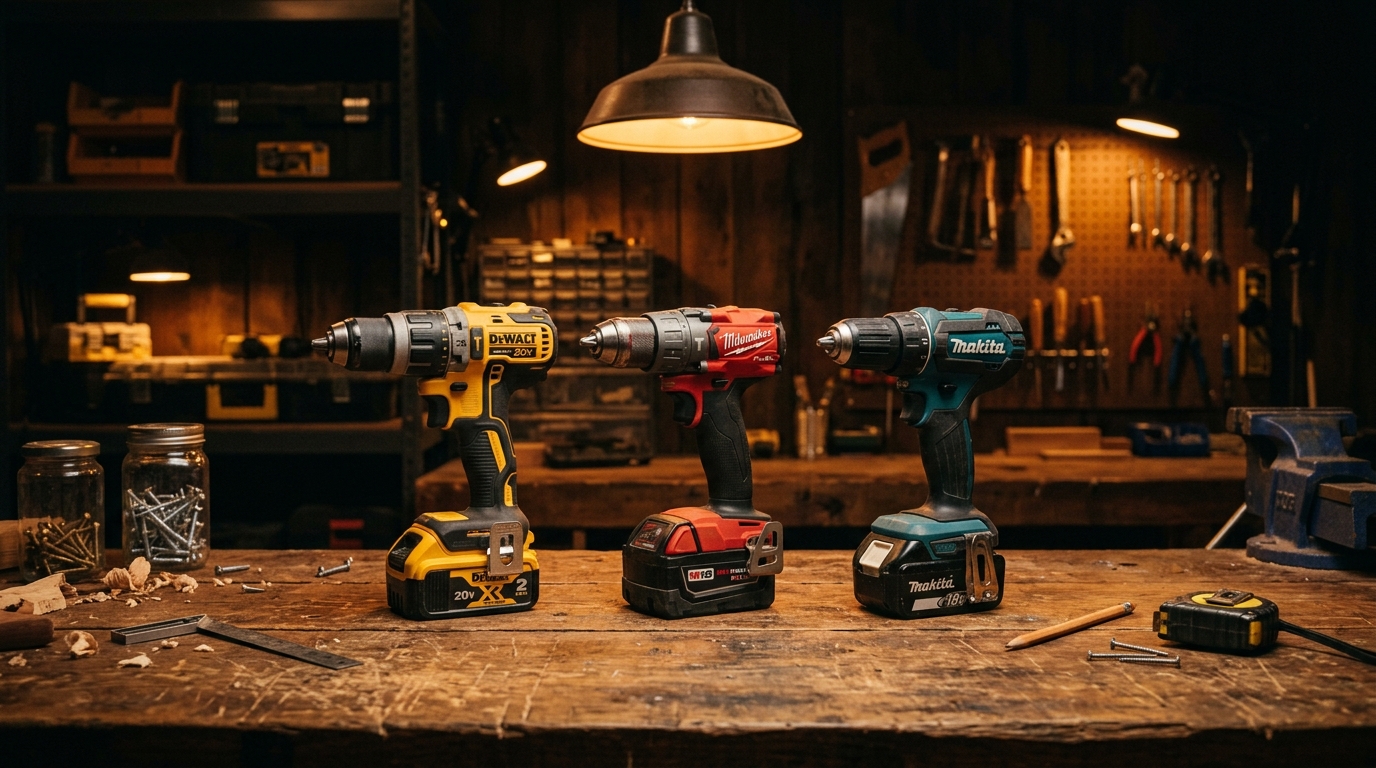
Milwaukee vs DeWalt vs Makita: Best Cordless Drill Driver Showdown 2026
We put the Milwaukee M18 FUEL, DeWalt 20V MAX XR, and Makita 18V LXT drill drivers head-to-head. Here's which one wins for pros, DIYers, and everyone in between.