The New Homeowner Starter Loot Kit: First Tool Set
92% of new homeowners hit a surprise repair in their first year. This kit gives you the 10 tools that handle most of them — organized into three budget tiers from $150 to $450.

Affiliate Notice: This guide contains affiliate links. We earn a commission if you buy through these links. See our disclosure.
You closed on the house on a Friday. By Sunday, the kitchen faucet was dripping. By the following weekend, a cabinet door hinge had pulled loose and the bathroom caulk was cracking.
This isn't bad luck. It's the norm.
According to a 2024 American Home Shield survey of over 1,000 new homeowners, 92% experienced at least one problem in their first year of ownership (American Home Shield, 2024). Most of those problems don't need a contractor — they need the right tool and 20 minutes of your Saturday.
This kit gets you ready for that Saturday.
TL;DR: 92% of new homeowners hit surprise repairs in year one, with average out-of-pocket costs of $5,571 (American Home Shield, 2024). A $150 hand-tool starter set handles most of them. Add a cordless drill at the $300 tier and you're covered for 80% of what homeownership throws at you in the first two years.
What Actually Breaks in Year One?
The 92% statistic is sobering, but the breakdown is useful. AHS's 2024 data shows that first-year problems cluster around appliances (47%), leaks (roughly 20%), and worn-out fixtures — not structural disasters that require a licensed contractor. Most of them require a screwdriver, a pair of pliers, or a tube of caulk.
The leaks, fixtures, and most appliance-adjacent issues are handled with basic hand tools. The outliers — major roof work, structural electrical, full HVAC replacement — you're calling a pro regardless, and no starter kit changes that.
What most "starter kit" lists miss: the priority isn't completeness, it's timing. The most valuable thing about having tools before you move in is that you have them when the problem shows up at 9pm on a Tuesday.
Tier 1 — The Starter Kit (~$150)
These seven tools solve the majority of first-year homeowner problems. Buy all of them before you move in — not after the faucet starts dripping.

Hammer (16oz Curved-Claw)
A 16oz curved-claw hammer handles everything from hanging pictures to pulling old nails. The Estwing E3-16S has a solid steel handle — no hollow plastic neck to snap — and runs about $35. It'll outlast the house.
Estwing 16oz Steel Hammer on Amazon↗Tape Measure (25ft)
Get one with a wide blade that locks and stays rigid when extended horizontally. The Stanley FatMax is the default recommendation for a reason — the blade doesn't sag when you're measuring solo, which happens constantly.
Stanley FatMax 25ft Tape Measure on Amazon↗Screwdriver Set (6–8 piece)
You need both Phillips and flathead in multiple sizes. A Klein Tools 8-piece covers every screw you'll encounter in a standard home, and the handles are grippy enough for long stints of tightening cabinet hardware.
Klein Tools 8-Piece Screwdriver Set on Amazon↗Level (24-inch)
A 24" level is the minimum useful size for hanging shelves, cabinets, or curtain rods. Anything shorter and you're guessing on longer spans. Empire's 24" aluminum level has a magnetic edge for hands-free use on metal surfaces.
Empire 24-Inch Aluminum Level on Amazon↗Utility Knife
Caulk removal, packaging, drywall scoring, underlayment — a utility knife earns its place every single month. Get one with tool-free blade changes. Keep a pack of spare blades in the bag.
Stanley FatMax Utility Knife on Amazon↗Slip-Joint Pliers
Pliers handle hose clamps, stripped fasteners, and a dozen other grip-and-turn jobs that a wrench can't reach. Channellock's 9.5-inch version is the right size for household tasks.
Channellock 9.5-Inch Pliers on Amazon↗Adjustable Wrench (10-inch)
One good adjustable wrench handles most plumbing connections and appliance hookups. A Crescent 10" is wide enough for large supply-line nuts and compact enough to fit under a sink without contortion.
Crescent 10-Inch Adjustable Wrench on Amazon↗Starter Kit Handles
- Hanging pictures, mirrors, and shelving
- Tightening loose cabinet hinges and door hardware
- Basic plumbing (supply lines, shutoff valves, P-trap)
- Caulking and weatherstripping
- Flatpack furniture assembly
Tier 2 — The Complete Kit (~$300)
The Starter kit is hand-tool-only. The Complete kit adds a cordless drill and two companions that turn it into a genuinely capable home-maintenance setup.
According to Angi's 2025 State of Home Spending Pulse Report, 71% of homeowners are prioritizing preventative maintenance to avoid larger repair bills (Angi, 2025). Most of that preventative work — caulking, mounting, tightening — goes significantly faster with a drill.
Cordless Drill/Driver
This is the single most important upgrade in the kit. A cordless drill handles driving screws, boring holes, and assembling furniture at 5x the speed of a hand screwdriver.
For new homeowners choosing a battery platform: the Ryobi 18V ONE+ is the best entry-level choice — affordable combo kits, wide accessory ecosystem, and batteries that work across 300+ tools. If you're planning to build out a more professional setup over time, the DeWalt 20V MAX is the better long-term investment.
Ryobi 18V ONE+ Drill/Driver Kit on Amazon↗ DeWalt 20V MAX Drill/Driver Kit on Amazon↗Stud Finder
The moment you mount anything heavier than a picture — TV bracket, floating shelf, curtain rod into studs — you need this. The Zircon HD55 displays stud edges (not just center), which matters for bracket placement.
Zircon StudSensor HD55 on Amazon↗Tool Bag (24-inch)
Loose tools in a bucket is how you lose tools. A Stanley 24" open-mouth tool bag keeps everything organized and portable. The wide mouth means you can see what's inside without unpacking.
Stanley 24-Inch Tool Bag on Amazon↗The most valuable thing about the Complete tier isn't the drill — it's that organized tools in a bag are tools you actually use. Loose tools in a cardboard box are tools you "can't find" every time a repair comes up.
Complete Kit Adds
- Mounting shelves, TVs, and curtain rods into studs
- Driving screws into walls and trim without fatigue
- Finding studs accurately before drilling
- Hanging heavy mirrors and artwork
Tier 3 — The Pro Kit (~$450)
The Pro tier adds the tools you'll want in year two — once you're comfortable with the basics and ready to tackle finish work, deck repairs, or bathroom updates.
With unexpected repair rates nearly doubling year-over-year, having more capability in the kit pays off fast. 66% of homeowners cite cost savings as the primary motivation for DIY repairs, with estimated average savings of $2,128 across common repairs (Puls, 2025).
Circular Saw
The jump from drills to circular saws opens up lumber cuts, deck board replacement, and sheet goods. The DeWalt DCS391B 20V (or Ryobi equivalent) cuts through 2x lumber cleanly and runs off the same battery you already own.
DeWalt 20V MAX Circular Saw on Amazon↗Socket Set (1/4 and 3/8-inch Drive)
Once you start appliance work — replacing a dishwasher, servicing a garage door opener — you need sockets. Stanley's 99-piece combo set covers both drive sizes and every common fastener size you'll encounter at home.
Stanley 99-Piece Socket Set on Amazon↗Headlamp
Attic crawls, under-sink plumbing, basement electrical panels — these are dark places you will absolutely end up in. A hands-free headlamp isn't optional once you own a house. Black Diamond makes reliable ones that stay put.
Black Diamond Spot Headlamp on Amazon↗Caulk Gun
Window drafts, tub caulk, door frames — recaulking is annual maintenance in most climates. A smooth-rod caulk gun (not the ratchet type) gives you control over flow rate. Newborn's 930-GTD is the best budget option.
Newborn 930-GTD Caulk Gun on Amazon↗Pro Kit Adds
- Cutting lumber for deck repairs and trim work
- Appliance and hardware work requiring sockets
- Attic, basement, and crawlspace access
- Annual window and tub recaulking
Which Tier Should You Start With?
Most first-time homeowners overestimate what they need on day one and underestimate how fast they'll outgrow it. Honest answer: start with the Starter tier, use it for three to six months, then add the drill when you've actually felt the gap.
If your home is older than 1980 or has known deferred maintenance, go Complete from day one — you'll use the drill within the first month.
Skip This Kit If...
- You already own a cordless drill and basic hand tools
- You're renting (repair responsibility is your landlord's)
- You're outfitting for a specific professional trade
Frequently Asked Questions
What's the single most important tool for a new homeowner?
A 16oz hammer handles more first-year repairs than anything else — picture hanging, light demolition, nail pulling, and cabinet work. If you can only buy one thing, buy the hammer. But the tape measure, level, and screwdriver set together cost under $80 and collectively handle the majority of year-one jobs.
Do I need a cordless drill right away?
Not on day one, but within the first three months. Once you start mounting anything — shelves, curtain rods, towel bars, TV brackets — hand-driving screws into walls becomes impractical quickly. The Ryobi 18V is the best entry-level pick; the DeWalt 20V is better if you plan to build out a fuller tool set over time.
Is a bundle kit or individual tools a better buy?
Individual tools. The bundled "homeowner sets" at big-box stores typically include three quality pieces and fifteen fillers you'll never use. Every item on this list was chosen specifically — you're not paying for a carrying case full of Allen wrenches.
How much should I budget for first-year home repairs?
According to AHS's 2024 survey, 44% of new homeowners didn't budget for first-year repairs at all, and average out-of-pocket costs hit $5,571 (American Home Shield, 2024). The standard rule of thumb is 1–2% of your home's value annually for maintenance. Having tools to handle minor repairs yourself meaningfully reduces that number.
Tool bag or toolbox?
Bag, for the first few years. A bag is easier to carry, fits in tighter spaces, and doesn't require tools to be arranged in specific slots. Upgrade to a metal chest when your collection grows past what a bag holds comfortably — for most homeowners, that's year three or four.
Stock the Kit Before You Need It
New homeowner repairs don't announce themselves. The dripping faucet, the door that won't latch, the cabinet hinge that gives out — they show up on the worst possible weekend.
The Starter kit at $150 handles most of them. The Complete kit at $300 handles nearly all of them. Buy before you need them, not after.
[INTERNAL-LINK: best cordless drills for homeowners → comparison of top cordless drill picks by budget and brand]
[INTERNAL-LINK: home tool storage guide → guide on tool organization and storage options for small garages and apartments]
You Might Also Like
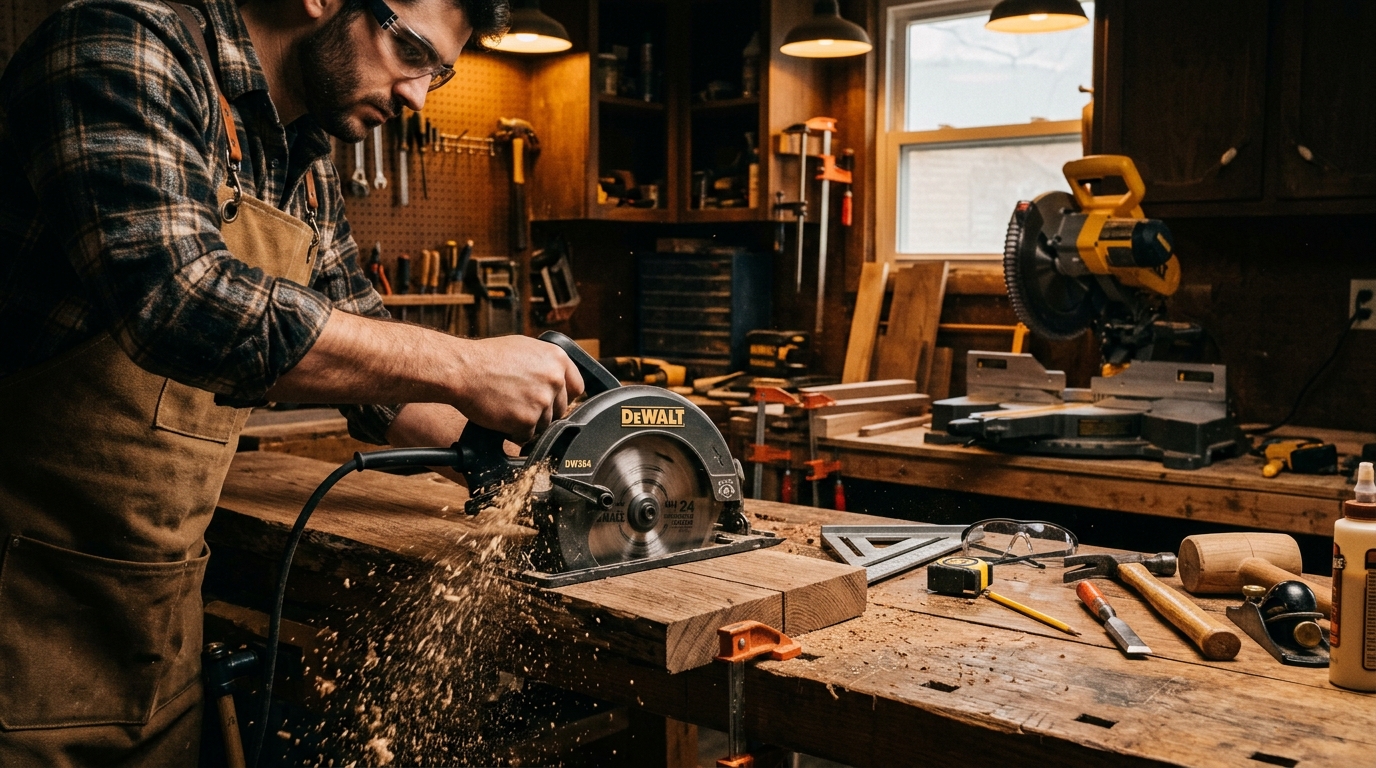
The Ultimate Beginner Woodworking Loot Kit: Everything You Need to Start
Most beginner woodworking guides tell you to buy a table saw first. That's wrong. This kit starts with the three tools that handle 80% of beginner projects — then builds up through three tiers from $350 to $1,200.
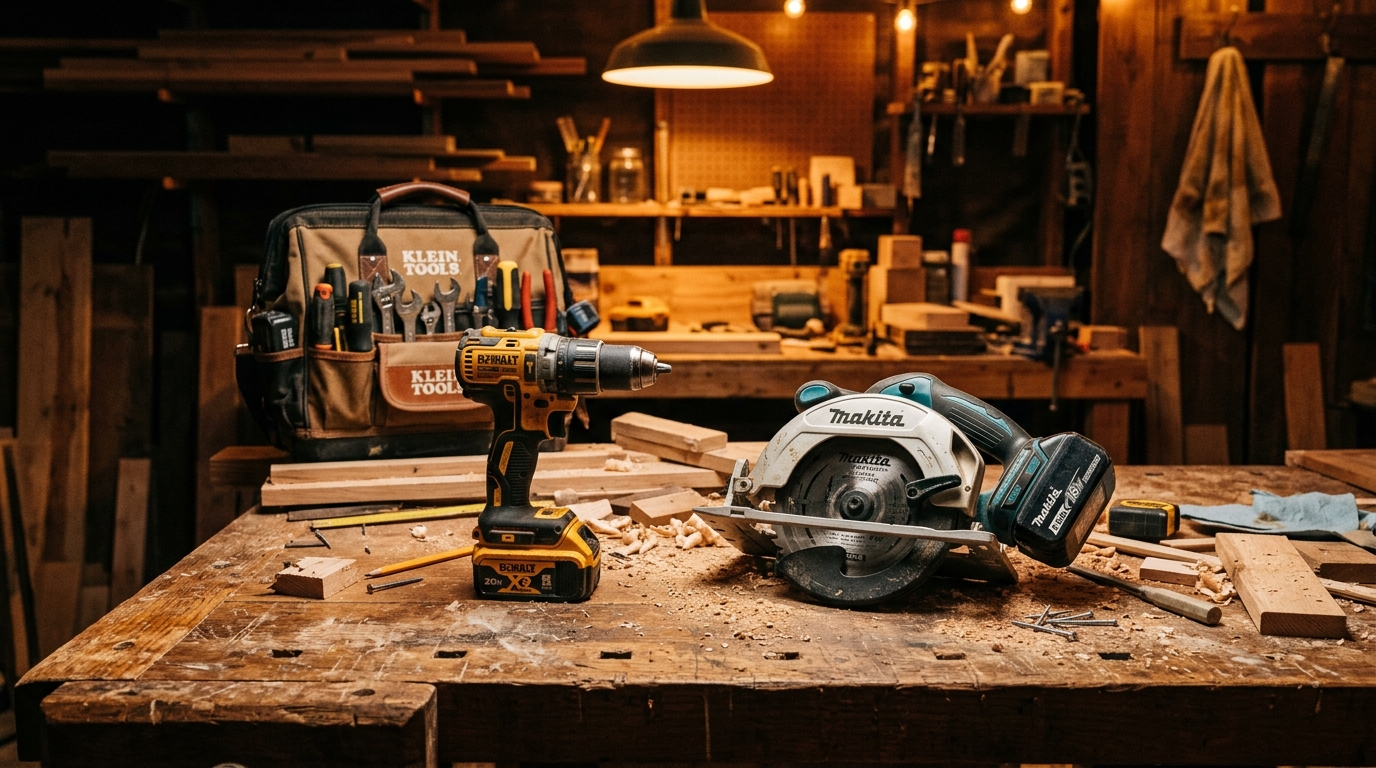
The Weekend Warrior Loot Kit: Power Tools for Casual DIYers
Most DIY projects need fewer tools than you think — but the right ones. This kit builds out in three tiers from $200 to $700, covering 80% of weekend projects without paying for gear you'll use twice.